Viking Dragon Torc Bracelet - Medium Braid

$160.00 - $375.00
(1 review) Write a Review
SKU:
JBVD
Availability:
Please allow 4-8 weeks for delivery.
Adding to cart… The item has been added

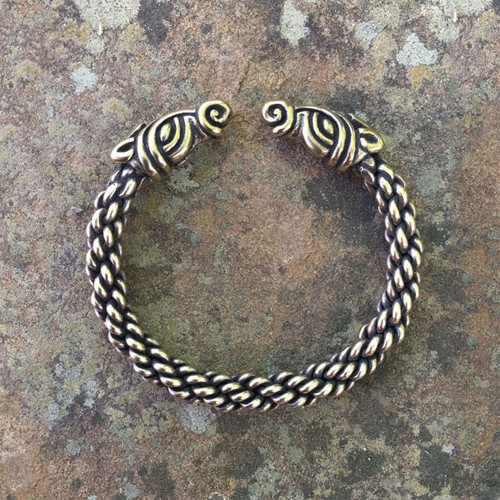
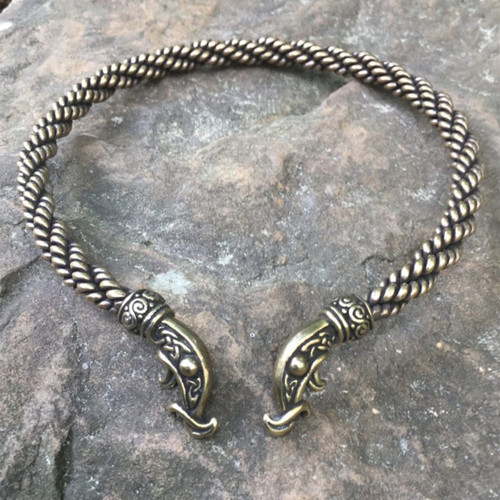
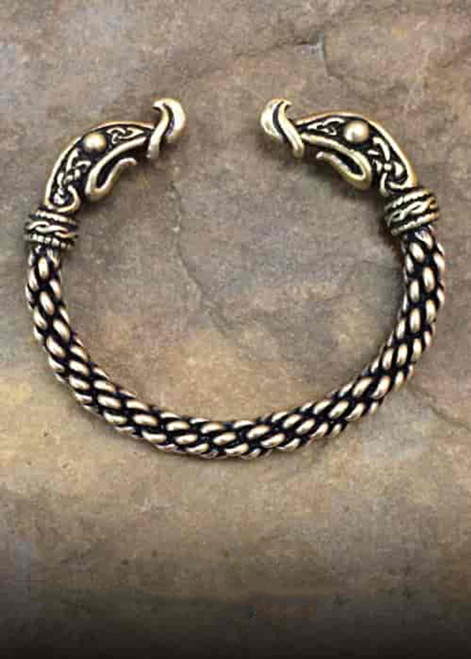
Medium Braid Viking Dragon Bracelet – Handcrafted Bronze or Silver

Channel the fierce spirit and artistry of the Norse seafarers with our Medium Braid Viking Dragon Bracelet. Inspired by the dragon-head carvings found on Viking ships, furniture, and the majestic stave churches of Norway, this bracelet is a striking homage to Viking craftsmanship and mythology.

Each bracelet is handcrafted in the USA using medium braid (12 gauge) wire for a perfect balance of strength, flexibility, and comfort. Measuring approximately 5/16 inch (8 mm) thick, it's available in your choice of bronze or solid sterling silver, and made to your exact measurements for an ideal fit. The intricately detailed dragon heads at each end are a powerful nod to the Vikings’ legendary artistry and their connection to protection, strength, and the unknown.

Whether you're celebrating your Norse roots or simply drawn to the timeless power of Viking symbolism, this bracelet is a wearable piece of ancient legend.

Bullet Points:

  • Inspired by Viking dragon-head carvings on ships and stave churches

  • Handcrafted in the USA from bronze or sterling silver

  • Medium braid (12 gauge); approximately 5/16" (8 mm) thick

  • Strong, flexible, and made to your custom measurements

  • Features detailed dragon heads symbolizing strength and protection

  • Ideal for Norse heritage, Viking reenactment, or everyday wear

  • A bold and meaningful accessory rooted in Viking legend

Custom-made just for you. Please allow 4-8 weeks for delivery.

The History of Torcs – Symbols of Power and Prestige Across Cultures

The torc—sometimes spelled torq or torque—is one of the most iconic and enduring forms of ancient jewelry. While today the term is sometimes used for bracelets or arm rings, “torc” traditionally refers to a neck ring, usually made from twisted metal and worn as a visible symbol of status, power, and identity.

Most strongly associated with the Celtic peoples, torcs were also worn by the Greeks, Scythians, Thracians, and other early European cultures. Both men and women wore them, and they are commonly depicted in sculptures and carvings from both Celtic and Classical traditions. Interestingly, torcs are found more frequently in women’s graves, suggesting they may have played a role in ritual, inheritance, or personal identity.

Origins and Evolution

Torcs first appeared during the Bronze Age (circa 1200 BC) in Europe. Early examples were typically simple in design—solid gold or bronze rods, sometimes rounded, square, or flat, occasionally flared at the ends to form plain terminals. These early forms laid the foundation for what would later become one of the most celebrated art forms of the ancient world.

It was during the Iron Age (5th–4th century BC) that the torc truly flourished. Crafters began twisting multiple strands of wire, casting torcs in solid silver, and hammering or coiling bars of iron into elaborate shapes. Artisans added zoomorphic, geometric, and organic motifs, with animal heads and intricate terminals becoming hallmarks of the finest torc designs. These became some of the most sophisticated and symbolic works in Celtic art.

Decline and Legacy

Though torcs fell out of general fashion during the Migration Era, their legacy endured. The British monk Gildas references torc-wearing warriors as late as the 6th century AD, marking the last written account of this ancient tradition. Interestingly, during the Viking Age, neck and arm rings similar to earlier torcs were once again crafted and worn by Norsemen, continuing their symbolic function well into the Middle Ages.

Today, modern torcs are still made by hand in bronze or silver, using techniques that echo ancient craftsmanship. American artisans coil and twist wire into “C” shapes, soldering on decorative terminals of your choice to create personalized, wearable pieces of history. Whether worn on the neck, wrist, or arm, the torc remains a timeless symbol of strength, heritage, and artistry.

1 Review Hide Reviews Show Reviews

  • 5
    Review from Mike H.

    Posted by Mike H. on Mar 11th 2013

    I bought the bronze one and it looks great and fits well also.